Water Heater Repair or Replacement? Signs & Costs Explained
Pilot light won’t stay lit? Older water heater tied into an outdoor boiler? Learn how we decide repair vs. replacement, including age, costs, stress, and safety.
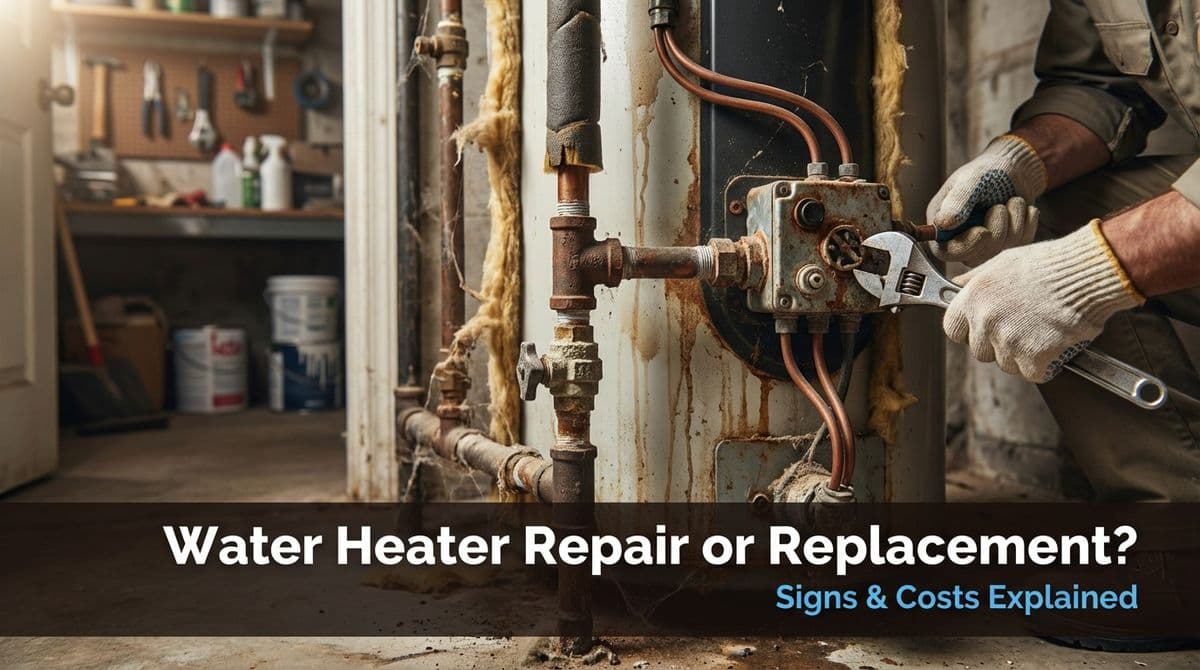
When a “Simple” Pilot Light Problem Isn’t So Simple
We recently got a call from a homeowner — let’s call him Dave — who sounded pretty determined right from the start. He told us, “I’m interested in getting my water heater replaced. The pilot light won’t stay on, it’s over 10 years old, and with my last place I just kept messing with it. This time I just want it done.”
As we talked, Dave mentioned something that made our ears perk up: he also had an outdoor boiler/furnace tied into his water heater, and that outdoor unit had a leak. He was worried the leak had forced his indoor water heater to run in “overdrive” trying to keep up.
In Dave’s case, we walked through the same steps we use with any water heater call: we asked about age, symptoms (like the pilot light issue), his utility bills, and how that outdoor system was plumbed into the water heater. Then we explained how we decide repair vs. replace so he could make an informed choice. That same process is what we want to share with you here.
How We Decide: Repair or Replace Your Water Heater
When we come out to a home like Dave’s, we mentally run through a checklist. You can walk through the same questions yourself before you call us out:
- How old is the water heater?
- What exactly is it doing (or not doing)?
- Has it needed repairs before?
- Is there anything else tied into it (like an outdoor boiler)?
- What will it cost to fix vs. replace?
With Dave, he already knew his unit was 10+ years old, the pilot light wouldn’t stay on, and he had that stressed plumbing setup. That put him right in the gray zone where we start leaning toward replacement instead of another band-aid repair.
Water Heater Age: Our Rule of Thumb
We always start with age, because it changes how we look at every other symptom:
- 0–8 years old: We usually try to repair unless there’s a major tank failure or safety issue.
- 8–12 years old: This is the decision zone. We weigh repair cost vs. remaining life very carefully.
- 12+ years old: We’re almost always recommending replacement, especially for gas tank-style heaters.
In Dave’s case, his heater was over 10 years old and had already been “on the watch list.” When a unit in that age range starts having burner or pilot problems, our experience tells us more issues are usually not far behind.
Pilot Light Problems: When It’s Fixable vs. Time to Move On
Dave’s first and biggest complaint was that the pilot light wouldn’t stay lit. When we’re standing in front of a water heater with that issue, here’s how we usually approach it:
Common, Repairable Pilot Light Issues
- Dirty pilot assembly: Soot, dust, or rust can partially block the flame.
- Weak thermocouple or flame sensor: It can’t “see” the flame and shuts the gas off.
- Drafts: Nearby vents or open access panels can blow the pilot out.
On a newer heater, we can often clean, adjust, or replace those parts and get you several more solid years of service.
When Pilot Light Issues Point to Replacement
On an older unit like Dave’s, we look a little deeper. Here are signs we tell homeowners to watch for:
- Repeated pilot outages: You relight it, it goes out again within hours or days.
- Rust or corrosion around the burner compartment.
- Yellow or flickering flame instead of a steady blue flame.
- Multiple past repairs on gas controls, thermocouples, or valves.
When we see these on a 10–15-year-old heater, we explain what we told Dave: “Yes, we may be able to get the pilot going again, but you’re close to the end of the tank’s life. We don’t want to charge you for a repair today if the tank itself might fail next year.”
How Connected Systems (Outdoor Boilers/Furnaces) Stress Your Heater
Dave’s setup included an outdoor boiler that preheated his domestic hot water and tied directly into the same plumbing as his water heater. When we see that kind of arrangement, we take extra time to inspect both systems together.
Here’s what we often find with connected systems:
- Constant circulation: If the outdoor unit is leaking or losing heat, the water heater can end up running almost nonstop to maintain temperature.
- Higher water temperatures: Some outdoor boilers run hotter than typical domestic hot water settings, which can stress the tank and internal components.
- Pressure and leak issues: A leak in the outdoor system can cause pressure fluctuations that show up as drips, odd noises, or inconsistent hot water inside.
When we came out to Dave’s home, we weren’t just looking at a tired water heater — we were asking, “Is this outdoor leak and piping configuration part of why this heater died early?” That matters, because if we replace the heater without addressing the cause, the new unit could wear out faster too.
Efficiency: Old vs. New Water Heaters
One thing we always go over with homeowners is how a new water heater can change ongoing costs. With Dave, we talked about the shift from an older, likely sediment-filled tank to a fresh, efficient one.
What we typically see with older heaters:
- Sediment buildup at the bottom of the tank, which forces the burner or elements to work harder.
- Worn insulation and heat loss through the tank walls.
- Inconsistent temperatures that lead to turning the thermostat up higher than needed.
Newer models often deliver:
- Better insulation and lower standby heat loss.
- Higher efficiency ratings (especially on newer gas models).
- More precise temperature control, which can also reduce scalding risk.
We don’t promise specific bill savings without seeing your setup, but many homeowners tell us they notice more stable hot water and slightly lower gas or electric bills after replacing a tired 10–15-year-old unit.
Safety Concerns That Make Replacement Urgent
There are times when we stop talking about repair entirely and move straight to, “We really need to replace this.” In our line of work, safety always comes first. Here are situations where we say that clearly:
- Gas leaks or strong gas odor near the heater.
- Backdrafting (exhaust gases spilling back into the home instead of going up the flue).
- Visible tank leaks, especially from the body of the tank itself, not just fittings.
- Severe rust or corrosion around the burner, flue, or base of the unit.
- Water overheating beyond safe temperatures, even at normal thermostat settings.
When we see any of those red flags, we explain why a repair wouldn’t truly make the home safer, and we guide homeowners through replacement options and timelines. If we had found any of these issues at Dave’s home, that would have moved his situation from “strongly recommended” to “urgent.”
Cost: Our 50% Repair vs. Replace Guideline
We try to keep the money conversation simple and honest. Here’s the rule of thumb we shared with Dave and share with most customers:
- If the repair is more than ~50% of the cost of a new unit and the heater is near or past its average lifespan, replacement usually makes more sense.
- If the heater is younger and the repair is relatively minor (pilot components, small parts, simple leaks at fittings), a repair can be a smart choice.
Every home is different, so we always provide a clear written estimate for both repair (if it’s safe and reasonable) and replacement, then talk through pros and cons with you right there at the water heater.
Quick FAQ: Questions We Hear on Calls Like Dave’s
“My pilot won’t stay lit. Can I just keep relighting it?”
We don’t recommend repeatedly relighting a stubborn pilot, especially if you’re smelling gas or the heater is older. Let us inspect it. Sometimes it’s an easy fix; other times it’s a warning sign of a failing valve or draft issue.
“Does an outdoor boiler shorten my water heater’s life?”
It can, depending on how it’s installed and controlled. If it causes constant circulation, higher temperatures, or pressure swings, your water heater can age faster. We always look at the entire system, not just the tank, like we did at Dave’s place.
“Should I wait until it fails completely to replace it?”
We usually advise against waiting for a total failure. A controlled, planned replacement lets us schedule around your life, protect your home from potential leaks, and make sure the new system is sized and set up correctly.
Not Sure Which Way to Go? Here’s How We Can Help
When we walked Dave through his options, we didn’t just jump to a sale. We checked the age, looked at the pilot issue, inspected the outdoor boiler tie-in, and talked about costs and safety. Based on that full picture, he decided replacement was the right move — and we made sure the new setup wouldn’t be stressed the same way.
If you’re staring at a stubborn pilot light, an older tank, or a complicated boiler/water heater setup, we can walk through the same step-by-step process with you. Our goal is simple: give you the information we’d want if it were our own home, then help you choose between repair and replacement with confidence.